
Where are the $100b companies in Boston?
28. On the Boston tech ecosystem discourse

Note: The views expressed here are the author’s own and do not reflect the views of Energy Impact Partners.
There’s an article making the rounds called the decline and fall of the american technology industry. The author is Will Manidis, a startup founder and angel investor who founded his company ScienceIO in Boston, reluctantly moved it to New York (“I would love to move back and not deal with New York”), and sold it for $140mm in 2024. The piece highlights Boston as an example to warn the tech industry that short-term thinking can cause ecosystems to collapse.
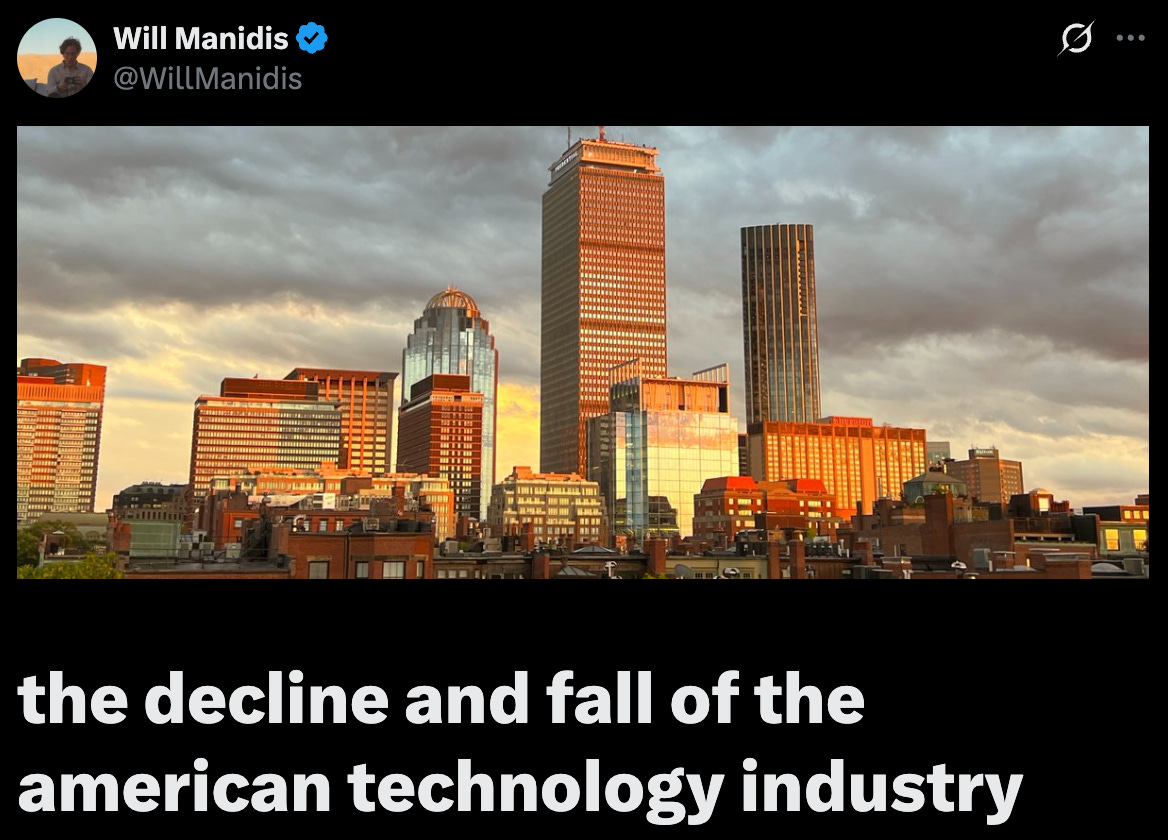
Will argues that three factors contributed to Boston’s decline and could soon come for the Bay Area:
A progressive regulatory state that treated business as a coffer to loot. Key excerpt:
For decades, Massachusetts refused to conform to federal QSBS rules. The state finally conformed in 2022. That same year, they passed the “Millionaire’s Tax.” A founder who sells for $10 million in Massachusetts owes $860,000. The same founder in Austin owes zero. Massachusetts also charges 6.25% sales tax on SaaS revenue. Most states don’t tax software at all.
And:
As the network evaporates, the state sinks its teeth in tighter to capture equivalent yield from whoever’s left.
A puritan culture too enmeshed in elite institutions to police itself.
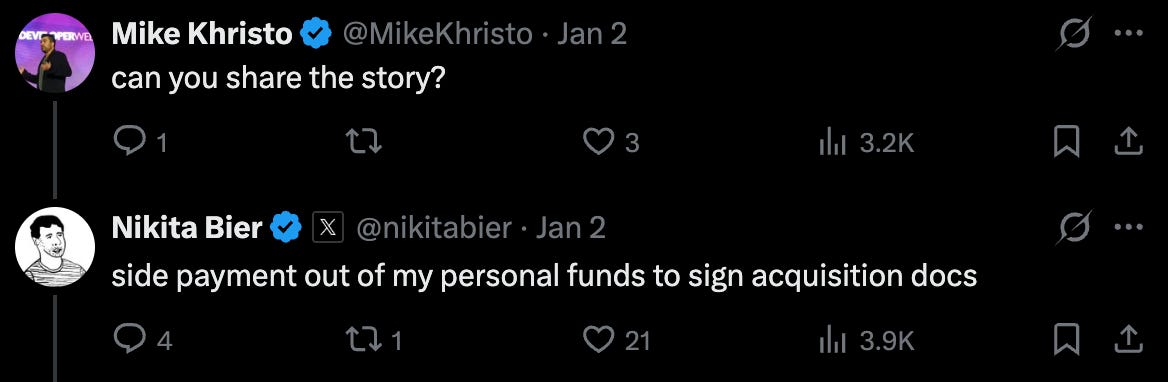
Post 2010 main activity of Boston-based venture is not building companies: it is extorting founders and running organized crime cabals … This meant a constant “trust tax” on conduct in the city.
He links to a tweet by repeat founder Nikita Bier:

An inputs-first view of technological progress.
We have the best universities. We built a ton of lab space (even if 40% of it now empty). We have the best talent in the world. So why isn’t it working? Can’t we build another innovation center? Is our soil alone not magic?
Will goes on to warn the Bay Area that the same fate could befall its ecosystem unless the industry can effectively justify its own existence on the national stage.
Look, the piece is a little dramatic. Boston is still a top 2-5 tech ecosystem in pretty much any category. I won’t weigh in on MA tax law, and it should go without saying that bad behavior by VCs is bad (and not unique to Boston).1 This piece is also focused on the software ecosystem, and it’s worth noting that the culture is different in biotech, hardware, deeptech, crypto, and so on.
But even with that out of the way, the piece is clearly onto something.
A year and a half ago, I wrote a post called The future of climate hardware is in Boston, in which I made the case that the metro area is the world’s great center of innovation in climate hardware. In short, I argued that its universities are excellent (duh), its hardtech talent density is best in class, and its historic and present risk-embracing culture made it an unparalleled ecosystem. Even though housing is expensive and public transit is weak, this was the place to be if you wanted to build the machines that will decarbonize the economy.
Over the past few months, I’ve been reflecting on this take and I now think it may have been totally wrong. Some anecdotes and a shocking fact:
When I joined EIP in 2022, we had five Boston area portfolio companies in the Frontier Fund. Today, we have (drumroll) five.
In 2023, I participated in a roundtable with Mayor Wu and her advisors about how to support the climate tech ecosystem in Boston. Since then, it looks like they’ve dipped their toe in the water with a few small programs, but it’s hard to say much more than that.2
Ahead of Boston’s flagship Tough Tech Week last year, a teammate and I tried to put together a dinner with generalist VCs who we thought might be in town. We went 0 for 15 and decided not to do it.
Incubators and accelerators have proliferated, but on average they now produce fewer investible companies.
The future of climate hardware anywhere is murkier now that the IRA has largely been repealed.
There has not been a single energy or industrial hardware company founded in Boston since 2021 that has raised even $50mm. A few later-stage companies have continued to raise, but Boston is clearly in a drought during one of the hottest venture capital markets in history.
But hey, housing costs have come down slightly.
There are a million dimensions one could analyze, but get too far into the weeds and I think you’ll miss the point. The breakout, potential $50-100b+ companies aren’t here. The vibes are off.
I moved to Boston in 2019 to join a vibrant startup ecosystem. My wife and I planted roots, bought a house, and had a baby. I now work remotely for a NYC-based firm and haven’t made a new investment in the Boston area since 2022. Oops?
Here’s where I look for hope.
New capital ecosystems have formed in deeptech and energy, which are generally not tied into the same LP bases that software founders have decried.
The Boston area is great at robotics, and AI-driven robotics is increasingly relevant to energy. Boston Dynamics is the crown jewel, Kiva Systems became Amazon Robotics, and at least six other companies have raised >$100mm: Locus Robotics, Berkshire Grey, Vecna Robotics, 6 River Systems (acquired by Shopify), Rethink Robotics, and Activ Surgical. As these companies exit and early employees see liquidity, you can expect some of them to start new companies. (If this is you, send me a note!)
The same thing is likely to happen for late-stage energy startups in the area. (Same deal, send me a note!)
Biotech has its ups and downs, but Boston is clearly still #1 or #2 in the category.
Inputs like universities and lab space aren’t everything, but they do matter. Silicon Valley’s “move to Miami” a few years ago failed in part because of a lack of talent density and infrastructure.
As Pillar GP Parker McKee notes, there’s at least one simple “switch” that Massachusetts could flip and unleash innovation: adopting California’s approach to non-competes and non-solicits. Consider his hypothetical:
“Two of the most senior engineers leave Commonwealth Fusion to start an even better nuclear company. (I’d drive over with a term sheet now!)”
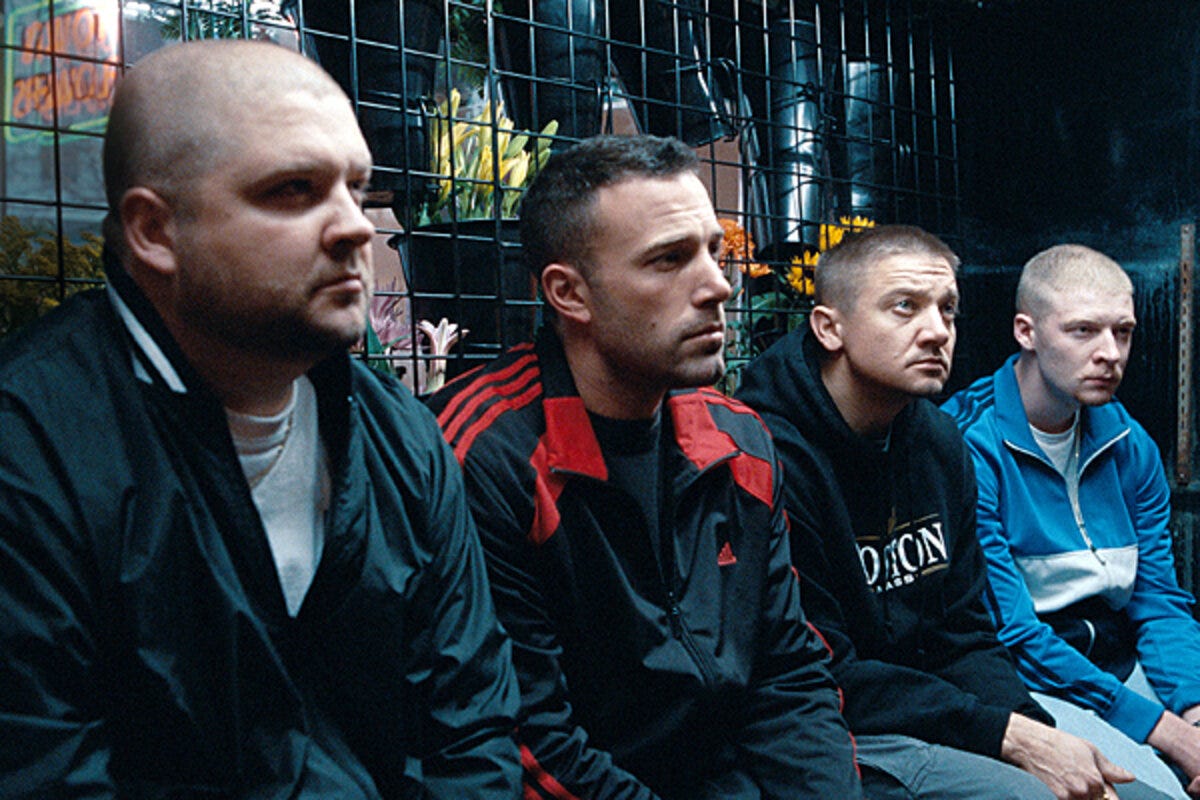
In Will Manidis’ telling, Boston is a bit like The Town: everyone knows everyone, loyalties run deep, and stepping outside the circle comes with consequences. The culture grinds down anyone who wants to break out and create something better. While there’s a kernel of truth here, I don’t subscribe to this view. Just like the actual Charlestown has reinvented itself since The Town came out, the Boston tech ecosystem has reinvented itself many times over the 200 or so years since we first set up textile manufacturing. I believe it will do so again.
Elsewhere:
Thanks for reading!
Please share your thoughts and let me know where I mess up. You can find me on LinkedIn and X.
For what it’s worth, I have personally seen very little bad behavior in six years here.
At any rate, most hardware is actually built in Cambridge, Somerville, and outer suburbs rather than Boston proper.